I moved to Los Angeles from a small town in Georgia in the fall of 2017 to begin my training at The Master’s Seminary. During my first weekend there, I met the then-president, John MacArthur. I had no idea at the time that I would have the extraordinary privilege of being around him consistently for the next eight years during my time at TMS and Grace Community Church. Here are some of the many lessons I learned from the example of his life and ministry.
Character
MacArthur was not just a world-renowned pastor, but a faithful man who walked humbly with the Lord. For Pastor John, the character of the pastor was foundational to effective ministry. He modeled integrity, discipline, humility, and unwavering commitment to truth. He believed that a pastor must lead not just through words but by example—demonstrating personal holiness, doctrinal faithfulness, and a servant’s heart. In his view, giftedness could never replace godliness, and the pastor’s life must embody the message he preaches.
You can fake godliness. You can put on a show in public. You can preach with eloquence, telling others how to live. You can fill shelves with volumes of theology and wear out printing presses with your words. But if you do not truly know Christ—or as a believer, if you do not tirelessly pursue the Spirit’s work of bearing fruit—your true condition will be exposed. John MacArthur was not like this. He not only preached the truth; he lived it with integrity, consistency, and faithfulness to the very end.
I am thankful I saw the man behind the pulpit—a godly man walking humbly with God.
Self-Discipline
Anyone familiar with MacArthur’s ministry knows he was remarkably productive. He authored or edited numerous books, including many Bible commentaries. He launched an international radio ministry, served as president of both a seminary and a college, and was a sought-after speaker at churches and conferences—all while faithfully carrying out his regular pastoral duties at Grace Community Church. In addition, he was involved in many other responsibilities that demanded his time and energy.
Needless to say, John MacArthur was an extremely hard worker—as every pastor ought to be. He didn’t waste time, a temptation every wise pastor learns to resist. He was well read, not only in theology but also in history and contemporary culture.
MacArthur’s life was a model of pastoral self-discipline. He used his time wisely, avoided distractions, and stayed committed to studying, preaching, and leading. Pastors today must follow this example—resisting laziness, staying sharp in the Word, and managing their time for maximum impact in ministry.
Teamwork
MacArthur was a strong and effective leader who left his mark on every ministry he touched. He took a deep interest in the life of Grace Community Church, even when not directly involved in something, yet he never micromanaged. Instead, he trusted his team, affirmed their gifts, and gave them the freedom to serve according to their God-given calling.
Pastor John would often say to us: “A real leader will work hard to make everyone around him successful. His passion is to help make the people under his leadership flourish. That is why a true leader must have the heart of a servant.” MacArthur knew that it is not his ministry, or ours—it is God’s, and all the glory goes to him.
MacArthur modeled advancement for leaders in a way that was unmistakably biblical and profoundly practical. First, he gave men responsibility—he believed the surest way to grow a leader was to entrust him with real work and hold him accountable for faithfulness. Second, he equipped leaders with resources—from theological training to practical tools—never sending men into ministry ill-prepared, but always insisting they discipline themselves in study and prayer. Third, he gave them access—access to himself, to the ministry, and to the inner workings of how decisions were made. Pastor John lived life alongside his teammates, letting them watch, learn, and even share his burdens. He opened his life so that others could see faithfulness modeled up close. In doing this, he raised up men who not only knew sound doctrine but also understood how to live it out, serving Christ and his church with conviction and integrity. His leadership reminds pastors that effective ministry requires both humility and trust in others.
Clarity
After every sermon preached during my time with him, MacArthur always asked me, “Was I clear?” He consistently emphasized clarity in preaching as a nonnegotiable for faithful ministry. He believed that a clear message is essential for people to truly understand and apply God’s Word—leading to salvation, spiritual growth, and holiness.
I once asked Pastor John what was most important in preaching. His answer was simple: “Be clear.”
He often said the response that pleased him most after a sermon was “The message was clear.” Clarity is essential because ambiguity produces nothing but confusion. People cannot be saved, sanctified, or comforted if the truth is muddled. Further, if a preacher is unclear, it usually means he has not yet worked hard enough to be clear in his own study.
From the start of his ministry, Pastor John committed himself to expository preaching—simply explaining the Bible—because nothing he could say would ever be as important as what God has already said. His goal was always to remove his own opinions, discern the meaning of the passage, and make it clear to the listener. The pastor’s task is not to impress or to entertain but to clearly declare the Word of the living God.
Boldness
MacArthur has long been a steadfast voice for biblical truth. Though his convictions have often invited controversy, it is evident that his desire was not to provoke but to remain faithful to Scripture. His unwavering commitment to God’s Word has stirred both encouragement and challenge within the body of Christ.
In a culture that frequently bends under the weight of public opinion, his boldness serves as a powerful reminder of our calling. As Christians—and especially as pastors—we are entrusted with the sacred responsibility of proclaiming God’s truth with both clarity and compassion.
As MacArthur once said, “Courage is contagious ... if you have the courage of conviction, let me tell you, God will use you to affect the lives of others.” May we, like MacArthur, be found faithful—not in seeking controversy, but in standing courageously for the truth that sets people free.
Kindness
John MacArthur embodied the paradox of a “tender lion.” In the pulpit, he roared with conviction—fearless in proclaiming God’s truth, unwilling to soften Scripture, and unshaken by the opinions of men. He preached with boldness because he preached before an audience of One.
Yet when he stepped down from the pulpit, the lion became a shepherd. Those who knew him best describe him as the kindest man in the room—gracious, humble, quick to encourage, and gentle with people. The same man who thundered God’s Word with authority also stooped with compassion to care for souls.
That is the beauty of true spiritual courage: strength without harshness, conviction clothed in kindness—the heart of a tender lion.
I will never forget how, after Grace Community Church opened its doors during the COVID era, it seemed the eyes of the whole world were focused on our church. Pastor John was on every podcast and news outlet in the country. He himself was facing the threat of jail time. That Sunday, the worship center was packed.
All three of my daughters have a rare lung disease, and during that season, my middle daughter was in the hospital for three straight months. As soon as I sat down next to him that particular Sunday, Pastor John turned to me and asked, “How is Caroline? How is your wife? How are you? What can I do to help you?” Literally the whole world was about to watch this man preach—but in that moment his heart was concerned for me and my family, like that of a faithful shepherd should be.
I saw Pastor John like this all the time. He was kind to everyone. He never looked at those around him as beneath him, but as souls to love and lives to invest in. He never sought recognition, not even at the celebrations held in his honor. He simply saw himself as a servant—faithfully laboring for the glory of the King of kings. MacArthur saw souls that will live forever with a shepherd’s eyes—and he treated them with kindness.
Hobbies
One time Pastor John asked me to come into his office. He closed the door, looked at me, and to my surprise asked, “Do you have a hobby?” I told him I followed the Atlanta Braves. He raised an eyebrow and said, “That’s it?” I assured him, “Pastor John, you don’t understand—I’m into it. I hardly miss a game. They’re my favorite.” He smiled and told me I needed another hobby. With my baseball background, he suggested I try golf. Honestly, I thought golf was lame—until he added, “It’s a good pastor’s sport. It keeps you humble.”
Two weeks later, someone gave me a set of clubs. After my first round, I realized two things: golf isn’t lame, and it certainly does keep you humble. Pastor John loved the game of golf, though I never had the chance to play with him. What struck me most was his perspective: hobbies can be permissible and beneficial for Christians when they are kept in proper balance—when they glorify God, refresh the believer (including pastors!), and never compete with the higher priorities of family, work, and worship.
Pastor, take MacArthur’s advice: if you don’t have a hobby already, find one. Step away from the constant work of ministry and allow yourself to be refreshed. Too many pastors treat social media as a hobby—but all they find there is arguing over every little thing. That’s not recreation. Turn your phone off. Step outside. Enjoy God’s creation. In the words of Pastor John himself: “Play some golf.”
Bible
I’ve saved the most important lesson for last. Above all else, what I learned from my pastor was the life-transforming power of God’s Word to shape the church. Everything John MacArthur did flowed from his unwavering faith in the authority of Scripture and his trust in the Holy Spirit’s power to use the Word to save and sanctify sinners. I still remember him once telling me, “There is nothing more serious than preaching and teaching the Word of God.” That conviction shaped his whole life.
People often tell me they look to Grace Community Church as a model for ministry. Certainly, God has blessed the church in countless ways over the years. But all of that fruit traces back to one central foundation: the consistent, week-in and week-out exposition of Scripture. No gimmicks. No clever strategies. Just faithful, Spirit-empowered preaching of the Bible.
Pastors, take heart in this simple but profound truth: your responsibility is to teach the Bible faithfully and trust God to do the work. Ministry is not about innovation or influence; it’s about dependence—on the power of God’s Word and the work of His Spirit. If you ever wonder whether that’s enough, just look at what God has done through MacArthur’s ministry. Or better yet—look at what God can do through yours, if only you will preach the Word.
Looking Back with Gratitude
I last saw my pastor, mentor, and friend at his home, just five weeks before he passed into glory. It was my last Sunday at Grace Community Church before I stepped into the pastoral role where I now serve. I have been here for almost six months, and not a day goes by that I do not think about MacArthur—whether in ministry, studying, preaching, or striving to be a faithful husband and father. What I have shared above is only a small taste of the countless lessons I learned from him.
I miss him deeply, but I am profoundly thankful to God for his life—and for how his faithful example continues to shape mine.
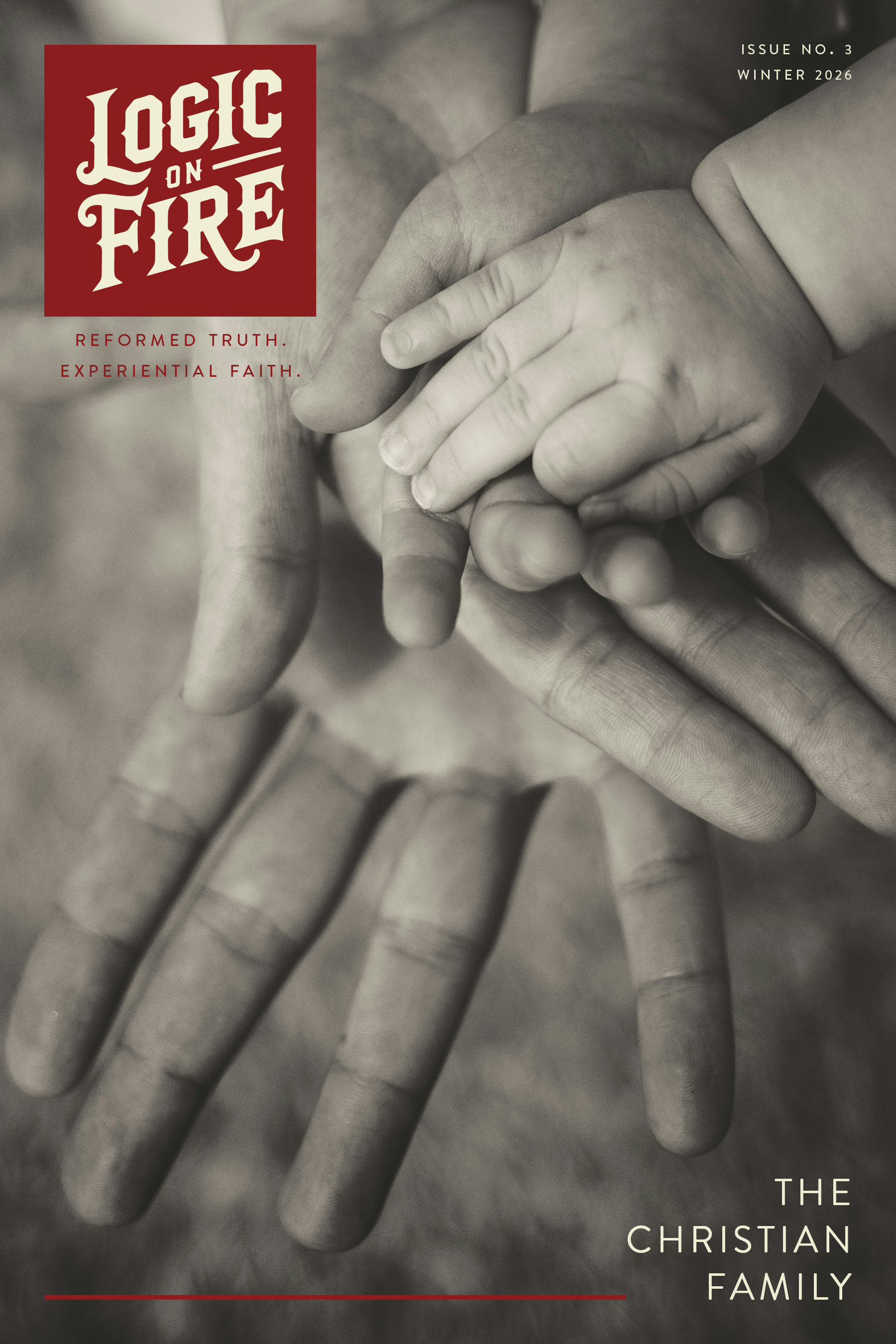
This article was originally published in the third issue of Logic on Fire Magazine, titled The Christian Family. A ministry of Unashamed Truth, Logic on Fire is devoted to thoughtful, biblical, and theologically rich writing that seeks to unite sound doctrine with the lived experience of the Christian faith. Each issue is designed to strengthen the church, encourage believers, and deepen a love for Christ and His Word. Subscribe to Logic on Fire Magazine to receive future issues and enjoy faithful writing from pastors, theologians, and Christian leaders.